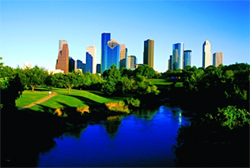
In the latest grand accolade for the Petro Metro, Forbes predicts that within a decade Houston will be known as “America’s next great global city.”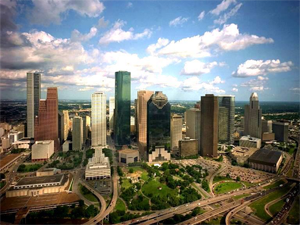
Forbes made the prediction in its article “A Map of America’s Future: Where Growth Will Be Over the Next Decade,” part of its “Reinventing America” series.
The article breaks the country into seven major regions, including the Third Coast — of which Houston is named the capital.
“Once a sleepy, semitropical backwater, the Third Coast, which stretches along the Gulf of Mexico from south Texas to western Florida, has come out of the recession stronger than virtually any other region,” Forbes writes. “Since 2001, its job base has expanded 7 percent, and it is projected to grow another 18 percent in the coming decade.”
Forbes notes two of Houston’s major economic powerhouses — energy and trade — as two of the driving forces behind the area’s success.
In addition to Houston’s energy prominence, Forbes also notes the racially and ethnically diverse metro has the world’s largest medical center and recently surpassed New York City as the No. 1 exporter nationwide. The diversification of the region’s economy will continue to increase as the area’s wealth grows, according to Forbes.
Last year, Forbes named Houston the coolest city in which to live, and the Bayou City has racked up numerous superlatives since then.
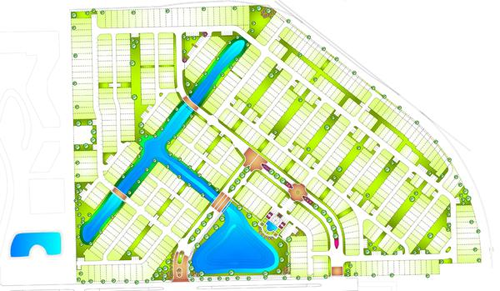 Map of the New Proposed Master Planned Community in the Houston Area



 (depicted mathematically at the right). You’ve got the Laws of Thermodynamics, the economic Law of Supply and Demand, heck you’ve even got Murphy’s Law.
 buyer pool significantly without those mandatory “features”. If you need to make fundamental repairs, you’re just going to have to suck it up and make them and not expect to recoup any of that money.
 improvements within the city. Incorporating a funding mechanism that establishes a pay-as-you-go program with no new debt or interest. Funding increases as old debt is paid, according to Dale Rudick, Deputy Director of the City’s Public Works and Engineering Department and Executive Director of ReBuild Houston. Rudick recently explained the program during a presentation at a local CCIM chapter meeting.
 is regulated by the state and will be a one-time fee. Primary uses include drainage projects providing capacity to offset future development and street projects providing added capacity for future development.

 reportedly signed for the 235,000 square feet in proposed Five Chasewood Park. Other energy-related firms, such as Southwestern Energy and Chevron, opted for owner-occupied properties. Southwestern broke ground on its 515,000-square-foot headquarters in North Houston, while officials with Chevron announced its plans for a new 1.7 million square-foot building at 1600 Louisiana in the Central Business District (CBD). Plans for the new building will be finalized in 2014, with occupancy scheduled for late 2016. Chevron will add the third tower adjacent to its current buildings at 1400 Smith and 1500 Louisiana, creating a downtown campus complete with employee amenities such as dining, fitness, training and conference facilities. These new announcements follow the first quarter’s news of BHP Billiton’s new 560,000-square-foot headquarters building in Uptown and Phillip 66’s multiple-building campus of 1.1 million in Westchase, among others.
 quarter of positive absorption – with the last eight quarters averaging 1.5 million square feet each – the industrial market appears to have stabilized, waiting for the next wave of new product to enter the market. Vacancy overall is down slightly from last quarter to 6.9%, compared to 7.5% a year ago. Manufacturing space has the lowest vacancy of 5.4%. More than 1.2 million square feet in 17 properties came online during the first quarter, entering the market collectively at 74.5% preleased.